
 Deutsch
 Français
Questions and answers
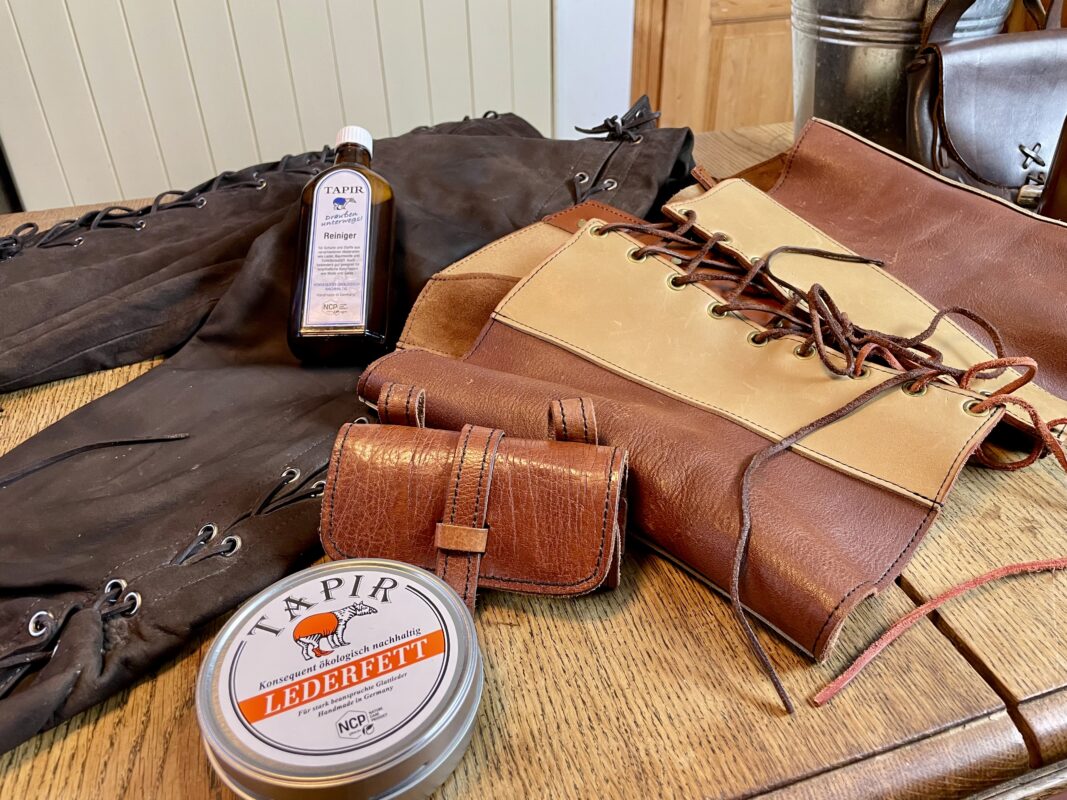
The art of leather care in medieval style
Jan
Frequently asked questions about leather care for medieval markets
Frequently asked questions about the care of medieval market equipment
Uses of leather types for medieval market
In medieval reenactment, at medieval markets or LARP events, different types of leather are used, which have different properties and care requirements depending on the intended use. Here is an overview of the most common types of leather and how to care for them:
1. Smooth leather (cowhide, calfskin, goatskin)
Due to its robustness, it was used in a variety of ways in the Middle Ages, e.g. for belts, bags, footwear, armour, tent attachments and sword scabbards.
Care requirements:
- Cleaning: First, dirt residues should be cleaned with a damp cloth or sponge and saddle soap .
- Care: Regular treatment with leather grease or leather oil makes sense to keep the material supple and protect it from drying out. Softer leathers can also be cared for well with the liquid
leather care from Tapir, braided leathers or exotic leathers are also in demand here. - Tip: In order to protect smooth leather from moisture in the long term and to make it weatherproof, it should be impregnated with our leather impregnation for smooth leather .
2. Suede (suede, suede, nubuck)
Due to its appearance, suede is often used for clothing such as jackets, trousers or gloves, as well as decorative parts such as bags and straps.
Care requirements:
- Cleaning: Gently remove dirt and stains with a soft brush or Tapirs suede eraser
- Care: To make suede water-repellent, you need special impregnating sprays for suede.
- Tip: Regular brushing with our brass bristle suede brush helps to maintain the original look.
3. Saddle leather (vegetable tanned leather)
Due to its stability and authenticity, saddle leather is often used in belts, sword scabbards, shoe soles, armor and, of course, horse equipment.
Care requirements:
- Cleaning: Use a damp cloth or a sponge and the tapir leather and saddle soap to remove coarse dirt. Repeat the process until the desired cleaning is achieved.
- Care: Massage with leather grease or leather oil from Tapir to keep it supple and resistant. Vegetable-tanned leather is more sensitive to moisture and therefore needs regular protection.
- Tip: try it on a concealed area beforehand, it can also get slightly darker.
4. Rawhide (untreated leather)
Since rawhide is extremely hard and stiff, it is used less often, for example for eardrums, shields, bowstrings or decorations.
Care requirements:
- Cleaning: Brush off dirt and dirt dry with a brush. Here
, too, the leather and saddle soap is a mild soap for cleaning. - Care: Be careful, occasional oiling keeps it stable, but too much care is more harmful due to its softening effect!
- Tip: Dry storage is important to avoid deformation and mold.
5. Parchment leather (thin, untreated leather)
This leather is often used for decorative purposes such as banners or book covers.
Care requirements:
- Cleaning: Dust with a soft cloth or dry brush.
- Care: Due to the high sensitivity of this leather, dry and climate-stable storage is important.
-
 Dirt brush with natural fibre bristles
4,50 €
Dirt brush with natural fibre bristles
4,50 € -
 Swelling sponge made of natural cellulose
3,90 €
Swelling sponge made of natural cellulose
3,90 € -
 Natural Shoe Shine Cloth
2,90 €
Natural Shoe Shine Cloth
2,90 € -
 Leather and Saddle Soap
17,50 €
Leather and Saddle Soap
17,50 € -
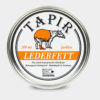 Leather grease
21,50 €
Leather grease
21,50 € -
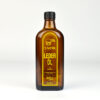 Leather oil
15,50 €
Leather oil
15,50 € -
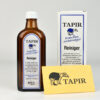 Out and about! Cleaner
22,50 €
Out and about! Cleaner
22,50 € -
 Suede eraser
7,90 €
Suede eraser
7,90 € -
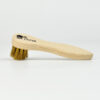 Suede brush with brass bristles
4,00 €
Suede brush with brass bristles
4,00 € -
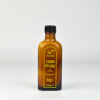 leather care
10,50 €
leather care
10,50 €
Why is the proper care of historical garments and tents so important?
Anyone who moves in the medieval, reenactment or LARP scene knows that you are completely exposed to the weather there. Either it is scalding hot in summer, or you are surprised by a good downpour.
In order to enjoy your leather items such as robes and tents in the long term and at the same time be protected in the best possible way from external influences such as the weather, regular care with suitable products is essential.
For rough cleaning, use a soft brush to remove dirt and dust. For suede, it is best to use a
For the subsequent wet cleaning, our mild leather soap is suitable, which must be gently massaged in with a damp cloth without soaking the leather. Soap residues should be wiped off immediately with a clean cloth.
After wet cleaning, the leather should dry completely. Here it is important that it is not exposed to direct sunlight or heating sources, as this can damage or harden the leather.
Then care for the leather with a suitable leather grease or leather balm to keep it supple and protect it from drying out.
In addition, a leather impregnation is recommended to protect against moisture and moisture. For tents, our outdoors on the road is ideal for this!
Even heavily used leather, such as shoes or belts, benefit from the above-mentioned care methods and products.
-
Dirt brush with natural fibre bristles
4,50 €
-
Swelling sponge made of natural cellulose
3,90 €
-
Natural Shoe Shine Cloth
2,90 €
-
Leather and Saddle Soap
17,50 €
-
Leather grease
21,50 €
-
Leather oil
15,50 €
-
Out and about! Cleaner
22,50 €
How do you clean a medieval leather doublet or dress without damaging it?
First of all, you should check what material it is. Depending on the type of leather or texture, different products may be necessary.
For rough cleaning, use a soft brush to remove dirt and dust. For suede, it is best to use a
For the subsequent wet cleaning, our mild leather soap is suitable, which must be gently massaged in with a damp cloth without soaking the leather. Soap residue should be wiped off immediately with a clean cloth or polished with one of our
After wet cleaning, the leather should dry completely. Here it is important that it is not exposed to direct sunlight or heating sources, as this can damage or harden the leather.
Then care for the leather with a suitable leather grease or leather oil to keep it supple and protect it from drying out.
When cleaning, be sure to avoid harsh chemicals, household cleaners or alcohol, as they can dry out or discolor the leather.
-
Dirt brush with natural fibre bristles
4,50 €
-
Swelling sponge made of natural cellulose
3,90 €
-
Natural Shoe Shine Cloth
2,90 €
-
Leather and Saddle Soap
17,50 €
-
Leather grease
21,50 €
-
Leather oil
15,50 €
-
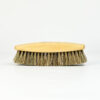 Shine brush with light, silver-coloured horsehair
19,90 €
Shine brush with light, silver-coloured horsehair
19,90 €
How to prevent leather tents and capes from being damaged by moisture or mold?
Since leather is an organic material that is sensitive to moisture and poor storage conditions, proper and regular care of your leather tents and capes is essential.
Protection against moisture
To make the leather sustainably water-repellent without impairing its natural breathability, use our high-quality leather grease or leather oil as an impregnation. The impregnation should be applied or refreshed regularly on the one hand and especially after heavy use or cleaning on the other.
Make sure that direct ground contact is avoided with tents, for example with a waterproof tarpaulin between the earth and leather.
Capes should always be hung up instead of being placed on wet surfaces.
Proper drying
Damp leather should be dried slowly in a well-ventilated and shady place. Direct sunlight or heat sources can harden or make the leather brittle. Moisture should be removed directly with a dry cloth or brush for larger areas.
Protection against mould
Make sure to store your leather products only in well-ventilated places.
Above all, tents that have become damp must never be stored folded, but must always dry completely first.
Check your tents regularly for mould, as mould detected early is easier to remove
-
Dirt brush with natural fibre bristles
4,50 €
-
Swelling sponge made of natural cellulose
3,90 €
-
Natural Shoe Shine Cloth
2,90 €
-
Leather and Saddle Soap
17,50 €
-
Leather grease
21,50 €
-
Leather oil
15,50 €
-
Out and about! Cleaner
22,50 €
Which products should be avoided when caring for historical leather pieces?
To ensure that the leather is not damaged or its natural authenticity destroyed, it is very important to choose the right products for the leather care of historical leather pieces.
Unsuitable products include harsh chemicals such as alcohol or solvents, modern shoe polishes containing silicones or synthetic dyes, excessive moisture, or sealing or non-breathable coatings.
Avoid experiments at all costs, as they can damage the delicate surface and destroy the patina.
If you want to take good care of your valuable historical pieces, it is best to use our natural products such as our leather and saddle soap or leather oil . This allows you to optimally preserve the durability and historical value of the leather.
-
Swelling sponge made of natural cellulose
3,90 €
-
Leather and Saddle Soap
17,50 €
-
Leather grease
21,50 €
-
Leather oil
15,50 €
How can the natural patina of historical leather be preserved?
The natural patina of historical leather makes it more authentic and aesthetic. Ageing, use and environmental influences create the patina that gives the leather a unique character. To get them, you should follow these steps.
Gentle cleansing
Avoid aggressive cleaners and chemicals at all costs, which can damage the surface of the leather and thus destroy the patina.
Instead, remove coarse dirt with a dirt brush, a soft shine brush or use our mild leather and saddle soap for wet cleaning.
Minimalist care
Use natural products such as our leather grease, leather balm or leather oil only when necessary and sparingly. Because too much care can cover the patina or make the leather too shiny.
Protection against damage
Direct sunlight can destroy the natural patina by fading. So make sure to store your historical leather in places out of direct sun. If necessary, use breathable covers, such as cotton cloths, to protect the leather from environmental aggressors.
Also, keep it dry, as moisture can lead to stains and mold growth, which in turn affects the patina.
Regular check-ups
Remove stains or mold immediately to prevent long-term damage. You should also check the leather regularly for signs of drying out, for example to avoid cracking and apply minimal care products if necessary. The
Over time, the patina will be constantly developed through natural use and aging processes, and you will get pieces of unique character.
How do you store leather clothing and equipment between events so that they don’t get damaged?
To ensure that your leather pieces are optimally prepared for longer storage and damage such as dehydration, mold or deformation is avoided, you should follow a few important steps.
Proper preparation
Your leather clothing and equipment should be thoroughly cleaned of dirt, sweat and other residues before storage. To do this, use either a dirt brush or, for more stubborn soiling, our mild
Suitable storage conditions
Store the leather in well-ventilated and dry rooms. Damp basements or warm attics should be avoided, as moisture and heat can lead to mold and dehydration. In addition, the leather should be kept out of direct sunlight, as UV radiation can fade the material and make it brittle.
Proper storage
Cover leather clothing with breathable fabrics such as cotton covers. Please do not use plastic bags as they can trap moisture and promote mold. Jackets, trousers or capes should be hung on wide padded hangers to avoid deformation.
Leather items such as straps, armor, or bags should be stored flat to prevent kinks and tension.
When storing, make sure that buckles or other metal parts do not press on leather surfaces to avoid corrosion or marks.
Mould prevention
In order to be able to remove mold quickly, you should check the storage environments and the leather regularly, about twice a year. Small bags of silica gel or activated carbon near the leather can absorb excess moisture from the air.
With these measures, your leather clothing will remain in optimal condition even over longer periods of time between events and will be ready for immediate use for the next use.
What measures help to protect leather tents from the weather?
While leather tents are durable and sturdy, they are sensitive to the elements such as moisture, UV radiation, temperature fluctuations and dirt. In order for a leather tent to be optimally protected and its service life to be extended, the following measures should be taken into account:
Protection against moisture
Treat the leather tent regularly with a high-quality, breathable waterproofing agent like our natural waterproofing from outdoors on the go! This makes leather or fabric water-repellent without impairing natural breathability.
To prevent moisture from the ground from entering the tent, you should always place a water-repellent tarpaulin between the floor and the tent. To avoid standing water and puddling, the tent should be wiped down directly with a dry cloth after rain.
After use, the tent must dry completely before it is stowed away. In this way, you counteract mold growth.
Protection against UV radiation and temperature fluctuations
If possible, set up the tent in shady places to reduce direct sun exposure. After use, be sure to store it in a dark, well-ventilated place. The storage location should be neither too hot nor too cold, otherwise the leather can dry out, become stiff or brittle. Also, avoid setting up or storing the tent close to fireplaces or heaters.
Cleaning and care
Dirt, dust and mud should be removed immediately after each use with a brush or damp cloth. For heavy soiling, our mild
To keep the leather supple and protect it from drying out or cracking, care for it regularly with leather grease or leather oil. Apply the products sparingly and wipe off any excess material afterwards.
At best, plan routine maintenance twice a year, even if you do not use the tent in the meantime.
Protection against mould and mildew stains
Store the tent in a well-ventilated and dry place. Before storage, it should always have been completely dried. To allow excess moisture to be absorbed from the air, a small bag of silica gel or activated carbon near the leather is suitable.
You should check the tent regularly for signs of mold or mildew stains. If you discover mould, remove it immediately, use Tapir leather oil for smooth leather.
Avoidance of overload
Make sure that the tent is not over-tensioned, as this will put unnecessary stress on the leather and can lead to cracks.
Fold the tent loosely before storage and avoid sharp creases, as these can also weaken the leather.
If you follow these tips, your leather tent will remain functional for a long time and will also be a loyal companion at future medieval events.
What methods of leather care were actually used in the Middle Ages?
As early as the Middle Ages, leather was considered a valuable material that was used for clothing, shoes, armor, containers, tents and much more. Since people depended on the long durability and functionality of the leather, they developed methods of care and preservation.
Fat. Oils and wax blends
Animal fats such as beef tallow, pork fat or lard or fish oil and oil were popular means of making leather water-repellent and keeping it supple. Mixtures of tallow and beeswax led to a protective layer, which was mainly used in shoes or weatherproof pieces of leather.
Resins and Waxes
Heated beeswax, which was applied to the leather, made it water-repellent and protected the surface. In addition, tree resins have been mixed with fats and oils to protect the leather from moisture and dirt.
Smoke and smoking
Leather was often smoked over fire, as the fire smoke had a preservative and impregnating effect. It also gives the leather resistance to moisture and mould.
Cleaning with natural means
Fine sand or ash was used to remove dirt particles from the leather. In addition, a weak vinegar-water mixture was used from time to time to clean heavily soiled leather.
Tannins for refreshment
Sometimes residues of vegetable tanning agents, for example from oak bark or willow bark, were used to strengthen the leather and renew its durability.
Herbs for mold defense
Lavender, sage, thyme or other herbs were placed between stored pieces of leather to keep pests away and counteract mold.
Despite all these measures, leather had a limited shelf life in the Middle Ages. Severe weather conditions, intensive use or neglect led to leather becoming brittle at some point, cracking or even decomposing.
Through these natural means and techniques, people in the Middle Ages were able to use leather objects for a long time, even if the care was not as advanced as it is today.
If you want to take care of your historic leather objects, why not rely on a proven and at the same time modern solution? Our Tapir care products combine the art of traditional leather care with natural ingredients and today’s effortless application. Treat your leather to the care it deserves – authentically, gently and uncomplicatedly.